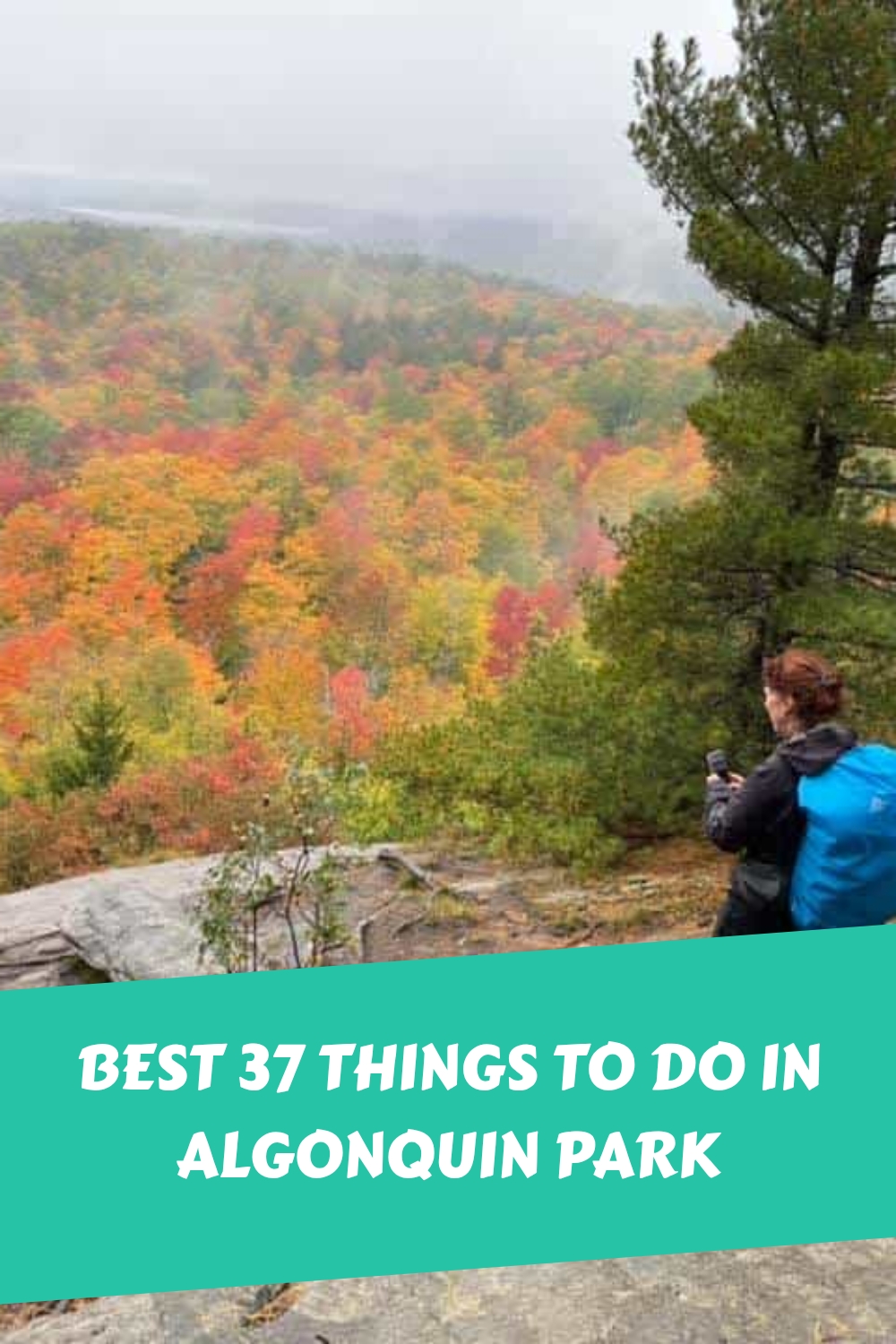

Looking for fun things to do during your visit to Algonquin Park?
You’ve certainly come to the right place because it is a park I visit often, as it is only a 3-hour drive north of Toronto. During my many times in the park, I have had the opportunity to try most of the trails and see the other attractions.
Use my helpful guide to get the most from your time in the park!

There are many things to do in Algonquin Park, which was the first provincial park in Ontario, established in 1893, and remains one of the most popular, as it is an easy drive from Toronto. The name comes from the Algonquin First Nations and means “at the place of spearing fish and eels”. But today, there are many more activities to enjoy in this massive 7,635 square kilometre park covered below.
Algonquin Park is known for great canoe routes, a variety of hiking trails, wildlife, and its autumn colours, attracting both local and many international visitors. There is so much to see, so this 2026 ultimate travel guide has been created to help you out. This is not about things to do in Algonquin National Park because it is a provincial park.
1. Fen Lake Ski Trail Algonquin Park
The trailhead is located right next to the west gate, and although little known, features 18 kilometres of groomed and track-set cross-country skiing trails on four loops through forested terrain. There is a heated washroom at the West Gate office. Note that snowshoeing is not permitted on this trail.
2. Western Uplands Backpacking Trail Algonquin Park
One of two backpacking trails in the park offers loops of varying distances up to 88 km in length. Rugged yet very scenic. Access is 3 km from the park’s west gate. Use AllTrails for help with your route planning.
3. Whiskey Rapids Trail Algonquin Park
This is an easy walk on a loop trail of 2.1 km, one of the shortest in the park, and with only 80 meters of elevation, suitable for families. This is the closest trail to the west gate, which makes it popular, so the parking lot can fill up. Your dog is welcome if kept on a leash.
4. Tea Lake Picnic Area, Algonquin Park

Located about 12 km into the park, turn on the access road, and a short drive brings you to a scenic stretch of the Oxtongue River with a plaque to Tom Thomson, the Group of Seven painters. The perfect place to sit down at one of the picnic tables to enjoy your snacks and then take a short walk to the dam that holds back the waters of Tea Lake.
5. Hardwood Lookout Trail Algonquin Park
The Hardwood Lookout Trail is also located not too far from the west gate. It is a short hike of 1 km, but the view makes the walk worth the effort. Yes, bring your dog (on a leash). It is closed in winter.
5. Canoe Lake Ontario Canada

Canoe Lake is just a short drive north off the Algonquin Highway 60 corridor, where you will find the permit office for backcountry camping. It is located off to the right of the parking lot next to The Portage Store. The store offers half-day and longer canoe rentals (with delivery available to other lakes in the park), a restaurant, a gift shop, and a camping supply store. A great place if you just want to canoe for the day.
The Park Bus from Toronto makes a stop here for people who don’t have cars and don’t wish to rent.
Canoe Lake, at 4 km, is popular for people who just want a short-day trip as well as a major starting point for those canoeing into the park’s interior. From a historical standpoint, this was where the upturned canoe of the famous Canadian painter Tom Thomson was located, and it has never been established how he died.
6. Canoeing in Algonquin Park

The park is famous for canoeing and kayaking, and is on the list of many Algonquin Park things to do. With many access points located within or just outside the park from which you can start these trips. For an interesting multi-day Algonquin Park canoe trip, I particularly like the route starting from Kingscote Lake Access Point, as not as crowded as Canoe Lake, Lake Opeongo, or Smoke Lake along the Highway 60 corridor.
Paddle and portage over 1600 kilometres within Algonquin. One thing is that there are no specific routes, but an interconnected network of lakes and ponds.
The park is famous for canoeing and kayaking, with many access points located within or just outside the park from which you can start these trips. I particularly like the route starting from Kingscote Lake Access Point, as not as crowded as Canoe Lake, Lake Opeongo, or Smoke Lake along the Highway 60 corridor.
Paddle and portage over 1600 kilometres within Algonquin. One thing is that there are no specific routes, but an interconnected network of lakes, ponds, and rivers. You will need to purchase an interior camping permit at a permit office or by phone. This is flat-water canoeing at its finest; there is very little white-water canoeing, and it was one of my first introductions to the park.
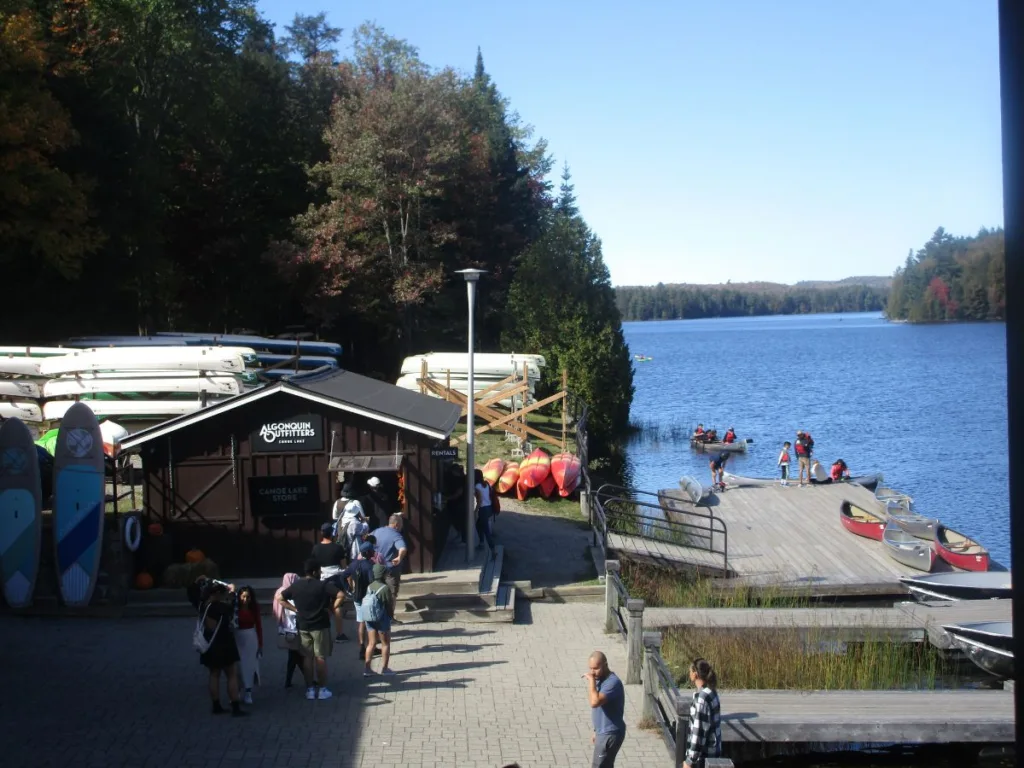
Want to go for a canoe trip?
8. Best fishing in Algonquin Park

Another reason to bring or rent a canoe is that Algonquin has over 2,400 lakes, 1,200 km of streams, and countless ponds available for fishing. The park has 54 different species of fish, but most are looking for Lake Trout, Smallmouth Bass, Brook Trout, and Splake, which are stocked in some of the lakes. Expect better success in the backcountry, where it is not as crowded.
Algonquin Park Bass & Trout Fishing tour – the guide states they have a 90% success rate for fishing trips.
9. Mizzy Lake Trail Algonquin Park
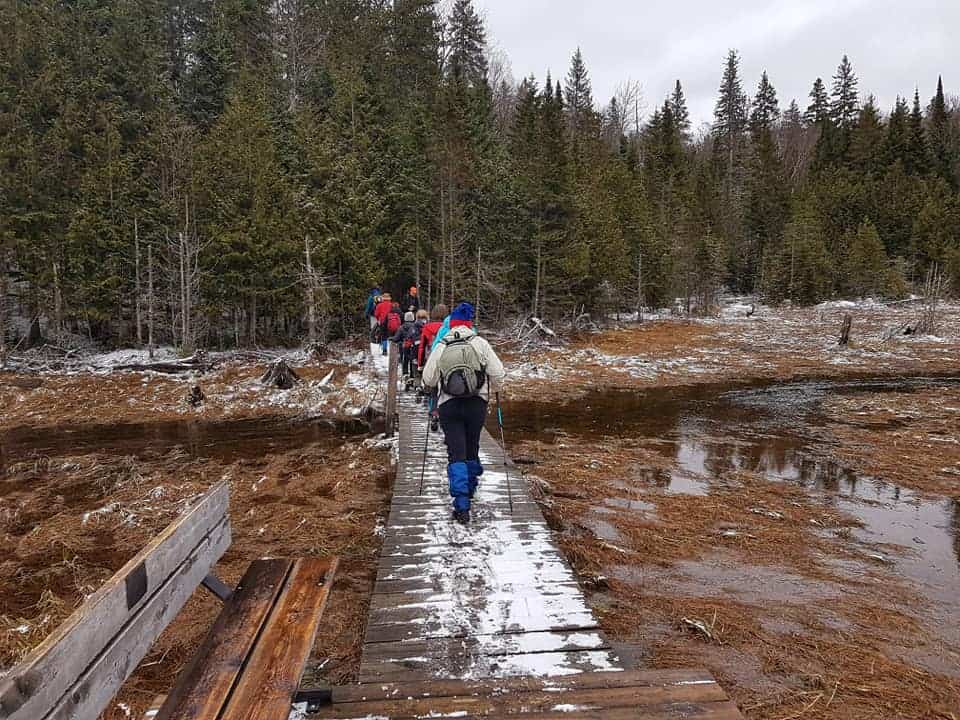
One of the more popular trails is Mizzy Lake, which is about 12 km. It provides one of the best chances to see wildlife, especially if you arrive early and beat the other hikers.
10. Peck Lake Trail Algonquin Park
The Peck Lake Trail should be hiked in the fall to see the colours. But whenever you go, the trail that loops around the lake is only 2.3 km.
11. Algonquin Art Centre
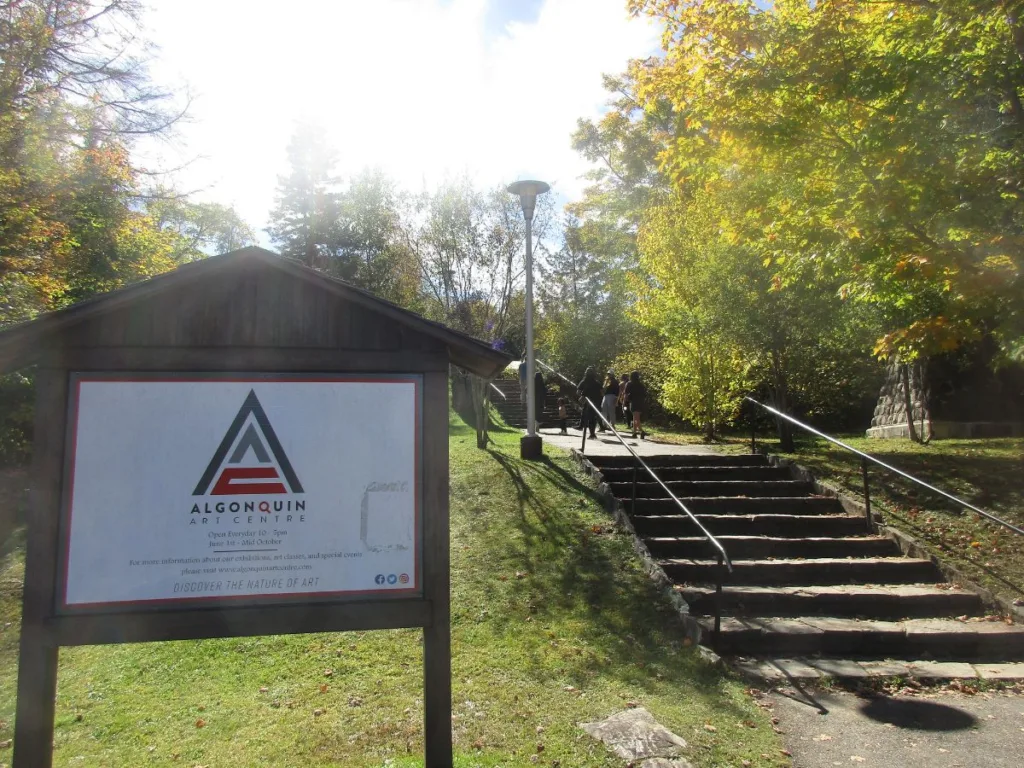
Looking for things to do in Algonquin Provincial Park, then this is something to consider. The former Visitor Centre on scenic Found Lake has been turned into the Algonquin Art Centre. Walk up a set of stairs to view works by artists who celebrate the park. Located at the 20 km mark, it is open from June to October.
12. Minnesing Trail Ski & Mountain Bike Trail
In winter, Minnesing is an 18.4 km wilderness that has cross-country ski trails that are not groomed. In summer, the same routes are for mountain bikes. It passes through hardwood forests while providing views of three lakes.
It is made up of several loops, and Mountain bikers can expect many steep descents, rocks, roots, and sometimes muddy sections in spring and fall. Located at the 23 km point.
13. Track & Tower Trail Algonquin Park
One of the more popular hiking trails in the park, with amazing views to see the natural beauty, including Cache Lake from the lookout point. But it is a bit challenging with a steep climb and plenty of roots and rocks along the route. A bit of history with the abandoned railbed that you walk along. If you go on autumn weekends, parking can be a problem.
14. Hemlock Bluff Trail Algonquin Park
This one is not as well-known as some of the others, but with only 3.5 km of length and a good view of Jack Lake, it is worth stopping for a visit.
15. Bat Lake Trail Algonquin Park

I really like this mid-length hiking trail because of the variety, including lookout points, steep descents, and boardwalks across some of the many ponds and streams. Not as busy as some of the other trails.
16. Highland Backpacking Trail Algonquin Park
The first loop of 19 km goes around Provoking Lake. If you continue, the entire journey is 35 km, which my brother and I did in two days. Consider it scenic but rugged, with plenty of rocks and roots, with lots of long climbs and descents.
17. Two Rivers Trail Algonquin Park
A lot is happening in the Lake of Rivers section of the park, with a store, bicycle rental, picnic area, the most popular campground, and the Two Rivers Trail. You may be surprised to learn that it is not crowded over its 2.3 km distance. There are some views following modest climbs.
18. Cycling in Algonquin Park

You can rent a bicycle from the booth located next to the Lake of Two Rivers Store or bring your own. The Old Railway Bike Trail from here is about 16 km in length and follows an old railway bed of the historic Ottawa, Arnprior & Parry Sound Railway through the woods and along Whitefish and Lake of Two Rivers to Rock Lake.
As mentioned earlier, there is also the Minnesing Wilderness Mountain Bike Trail. But I often see cyclists along the paved shoulders of Highway 60 all the way from Oxtongue Lake and through the park. Just remember this one is very hilly.
19. Lake of Two Rivers Store & Cafe
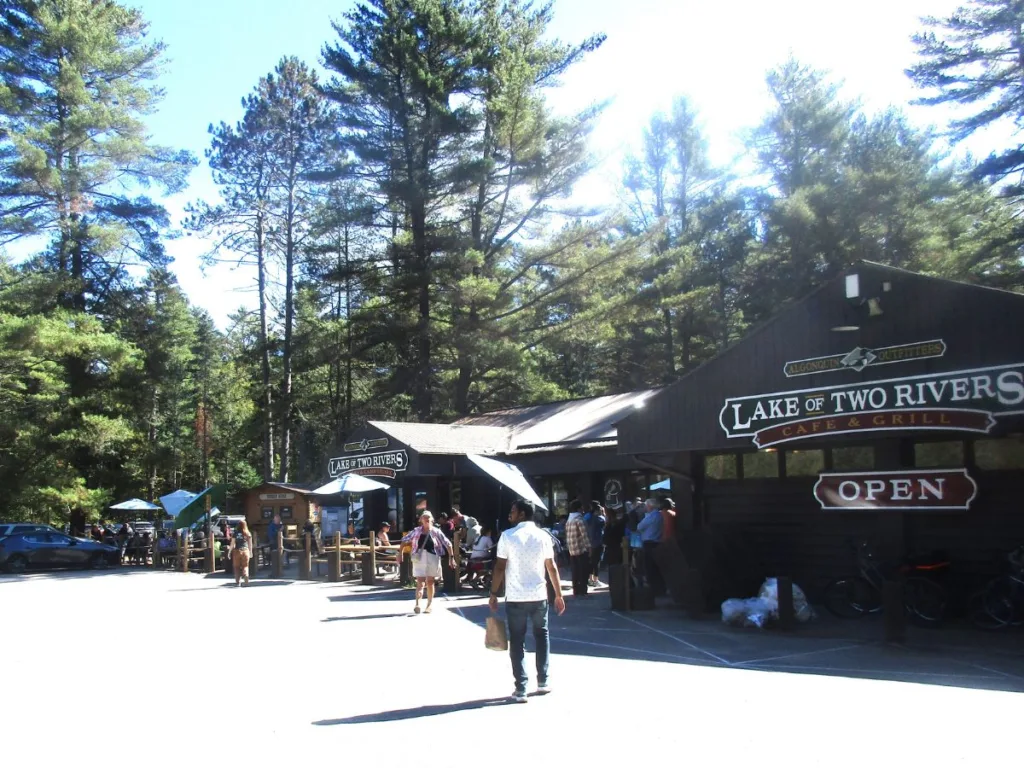
One of several stores in the park is one I always stop at for the delicious Kawarthas Dairy Ice Cream. One year, I was there on opening day in late April. And when they were in late September, there was a long lineup for the ice cream. They also offer an interesting menu with things like Bison burgers and Salmon burgers. There is a general store attached with a gifts section.
The Park Bus from Toronto stops here, as well as the other 2 stores. Other stores include The Portage Store and Opeongo Store.
20. Lake of Two Rivers Campground

There are 8 campgrounds along the Highway 60 corridor, and this is one of the most popular, especially with first-time visitors. The oldest campground in the park. My parents used to bring me here as a kid because of the beautiful beach and how close it is to the store. There is also a bus service from Toronto.
21. Lake of Two Rivers Picnic Area

My second favourite of the picnic areas (after Tea River) is very popular, but there are lots of picnic tables, and it offers superb views of the lake. I do need to take a better photo because the one above does not do it justice. Washrooms.
22. Wolf Howls & Outdoor Theatre
Wolf Howls are very popular, and you meet in the Outdoor Theatre at the 35.4 km point in the park first for a presentation about wolves. Then get in your car and follow the park staff and other cars to a location just off Highway 60.
The wild wolves sometimes do answer the imitation calls of the Naturalist staff. Did this when I was a child, and even though there were no wolves during my visit, I still remember the event years later. Check schedules, but often on Thursdays in August and September.
The Outdoor Theatre also has many outdoor presentations and talks. The East Beach picnic area is in an adjoining area.
23. East Beach & Picnic Pavilion
Located next to the Outdoor Theatre on Lake of Two Rivers is available for groups of up to 110 people. Used for weddings, family reunions, business meetings, etc.
24. Centennial Ridge Trail Algonquin Park
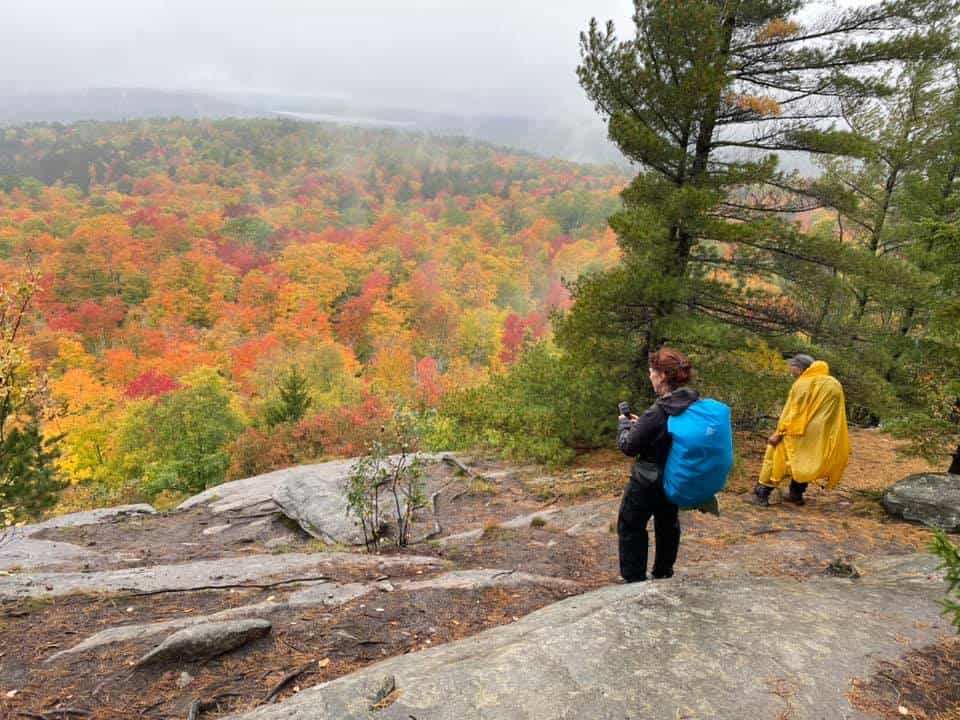
Centennial Ridge Trail is one of the most popular hiking trails in the park. It is slightly over 10 km, but hikers love the breathtaking view once they have climbed the hill. A lot of variety of terrain en route. The parking can get very busy during autumn weekends.
25. Lookout Trail Algonquin Park
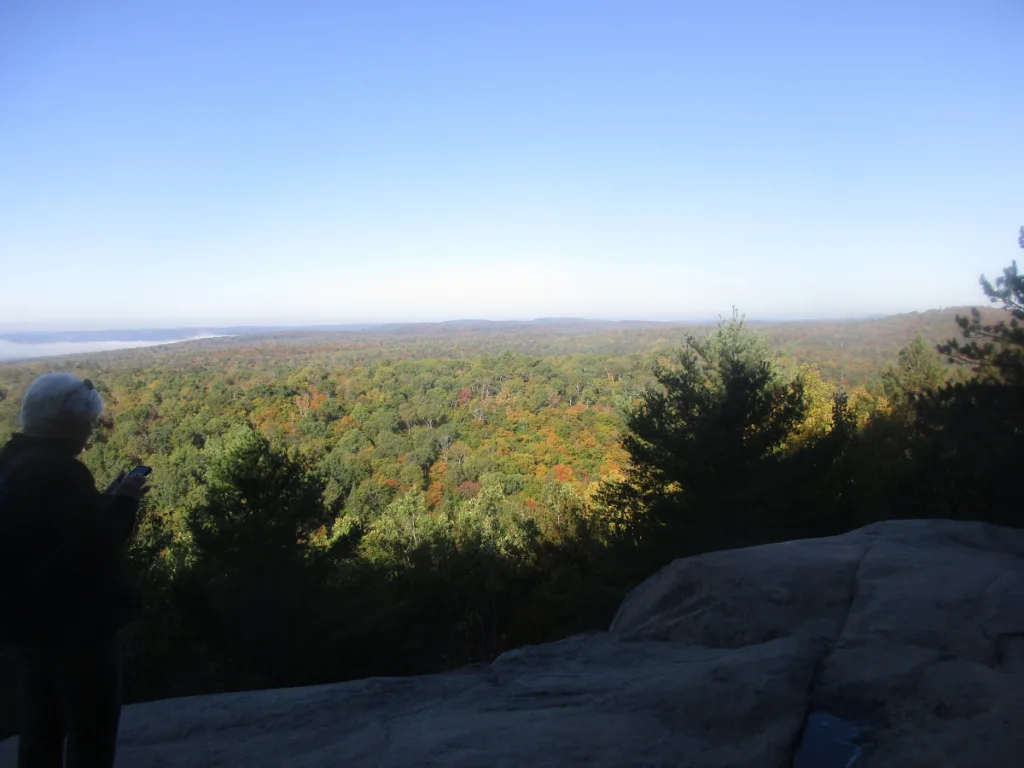
Rated moderate to difficult, which everyone ignores. It is basically a climb on a very wide trail with one of the best views in the park, with beautiful lakes in the distance and then back down on the other side of the loop. It is only 2.1 km, which is why on some weekends the parking lot is overflowing with tourists (not hikers).
26. Big Pines Trail Algonquin Park
Nice walk in the woods over 2.9 km. Peaceful; do not expect to see a lot of others, but you will see the remains of an 1880s logging camp.
27. Booth’s Rock Trail Algonquin Park

For trail access, you will need to drive south of Hwy 60, but along this 5.1 km loop, you will be rewarded with a spectacular view of the lake. It is moderately challenging because of the hills you need to climb.
28. Spruce Bog Boardwalk Algonquin Park

The easiest trail in the park is a boardwalk for much of the distance. It is wheelchair and stroller accessible for the 1.5 distance. This one is family-friendly, and after your walk, head across Hwy 60 to the Visitor Centre.
29. Algonquin Park Visitor Centre

When considering what to do in Algonquin Park, you want to take a look at the Visitor Centres. Located at km 43, the centre features a café, gift shop, viewing platform (with webcam), art gallery, and exhibits. The Algonquin Room has local art for sale. The exhibits feature stuffed animals like moose, bears, and others from the park in interesting settings.
This is the best way to learn about the park, as there are also displays on the original inhabitants of the park (The Algonquins) and some other displays of former hotels, the railway, and logging history. The center can be very crowded during the summer and autumn months. The Park Bus from Toronto also stops here.
New in 2025 is the Fork Lake Trail, which leaves from the Visitor Centre and goes for about 2.4 km.
30. Fire Tower Trail Algonquin Park

No need to climb on this one, as it is located at the Visitor Centre with a 200-meter (660-foot) fully accessible boardwalk that leads up to a Fire Tower replica typical of what was in Algonquin Park in the past. It overlooks Sunday Valley, particularly colourful in the autumn. Signs along the way describe its history.
31. Beaver Pond Trail Algonquin Park

Not long at 2 km, I love this trail. Expect a long boardwalk across one of the 2 beaver ponds with scattered beaver lodges and one of their beaver dams along the way. After the boardwalk, it is up a hill and down, but some of the hills have steps. Great views from the lookout points.
32. Lake Opeongo Algonquin Park

Around the 46 km point of Highway 60, head north for about 7 km to Lake Opeongo, where you will find a permit office and The Opeongo Store. The store rents canoes, has camping supplies, a gift section, and a café. The Park Bus sometimes stops here.
This is a long 16 km lake with many islands and campsites dotting the shore. At the north end is a portage taking you to the backcountry. One thing I did with a group is rent two of the huge voyageur-type canoes, which take 10 paddlers, for a weekend trip on the lake. We cheated a bit by having a water taxi take our gear to the campsite. Read our post about our Lake Opeongo Canoe Trip.
Algonquin Outfitters Lake Opeongo Boat Tours 1-888-280-8886
33. Algonquin Logging Museum and Trail

Another of the places to visit in Algonquin Park. This is a combined outdoor museum and a 1.3 km walking trail through the woods where you can see the 20 exhibits. There is also a film at the start with an introduction to the logging history of the Algonquin Area. The trail is wide and family-friendly. Surprised at how much I enjoyed this place.
34. Leaf Lake Ski Trail
Offers 45 km of groomed and track-set trails with most loops wide enough for classic or skate skiing. Expect challenging uphill climbs and long downhill runs over rugged terrain. Snowshoeing is not permitted.
35. Animals in Algonquin Park

Algonquin Provincial Park is home to over 50 types of mammals, including black bears and moose, plus over 30 kinds of reptiles and amphibians, and 144 species of breeding birds. There are no poisonous snakes.
The best time to see them is dawn and dusk, when the park is not as crowded. Focus on low-lying wet areas such as bogs and ponds.
The best moose viewing is in May and June as they are seeking sodium, which they get from the rock salt used by winter road crews along Highway 60.
If you wish to see a Beaver, it is best in October when they repair their dams and their stock of winter food supplies during the day.
For bears and wolves, there is no better place to view, but consider the Wolf Howl usually held on Thursdays in August & September. There are plenty of species of birds, such as loons, to see as well.
Also available is a 3 Day Moose Viewing Safari with Camping
36. Things to Do in Winter in Algonquin Park

The park is open all year with heated washrooms located at West Gate, East Gate, Mew Lake Campground & Visitor Centre (during operating hours).
During the winter months, hiking is available at Mizzy Lake, Track & Tower, Hemlock Bluff, Bat Lake, Old Railway Bike Trail, Two Rivers Spruce Bog, and Algonquin Logging Museum. Many of these are also suitable for snowshoeing.
For cross-country skiing, head to Leaf Lake, Fen Lake or the Minnesing Wilderness;
Winter camping is available at Mew Lake Campground (km 30.6) on the shore of Mew Lake. There are Yurts, a heated comfort station, and an outdoor skiing rink.
Dog sledding trail (parking at the sanitary station (km 35) is offered by some commercial operators.
37. Glamping in Algonquin Park
For something a bit different, stay in a Yurt, which is a tent-like structure sitting on a wooden deck floor that accommodates up to six people. Located at Mew Lake Campground and at Achray Campground on the east side of the park. I also noticed some at the Algonquin Outfitter’s location at Oxtonque Lake.
You can also rent rustic and historic Ranger Cabins, which are all constructed differently. Some are accessible by car, but others are located in the interior.
Tips for Visiting Algonquin Park
Directions to Algonquin Park
Located about 256 km (160 miles) north of Toronto, about a 3-hour drive. The most popular route is taking Highway 400 north, which merges with Highway 11 at Barrie and continues to Huntsville. Head east on Highway 60 to the park. Many people stop at a Weber’s just north of Orillia for a hamburger; it’s a tradition.
A more scenic route is taking Highway 35 north to Highway 60 and turning east. Although a shorter route, it takes longer due to the lack of passing lanes. Be sure to stop at the Kawarthas Dairy in Minden for ice cream; everyone does.
Park Bus – offers seasonal service to several locations in the park, plus Algonquin Outfitters and the Wolf Den Hostel at Oxtonque Lake. This bus is popular and often sells out.
My post on how to get from Toronto to Algonquin Provincial Park outlines 4 routes and attractions to visit along the way.
Reservations
If you want to visit Algonquin Park, you will require a permit. Go to 1-888-668-7275 or go online at ontarioparks.ca. You can reserve 5 months in advance. You can also pass at the park entrance, subject to availability. You will require a day pass to use any of the park facilities. As Canada’s oldest provincial park, it can get quite busy at times.
Dogs – you can take dogs with you while hiking, except on the Mizzy Trail due to the wildlife.
The best time for fall colours in Algonquin Park is the last week of September and the first week of October, usually. Be sure to purchase your park pass in advance, as space quickly sells out.
Special Events – there are many fun ideas for Algonquin trips, such as Logger’s Day, Waikami Wailers Concert, Halloween Haunted Weekend, and Art Displays. Check out algonquinpark.on.ca/specialevents for the current list
Near the park – At Oxtongue Lake near the west gate, you can find Algonquin Outfitters, motels, cabin resorts, and the Wolf Den, a hostel. On the edge of town is Ragged Falls Provincial Park, worth the stop.
Outfitters Algonquin Park
- The Portage Store, Canoe Lake (km 13) – seasonal
- Algonquin Outfitters Store, Lake of Two Rivers (km 32) – seasonal
- Lake Openogo Store (km 46) – seasonal
- Algonquin Outfitters, Oxtongue Lake-(open all year
The Visitor Centre (Km 43) also has a shop and café.
Camping at Algonquin Park
A very popular thing to do in Algonquin is to stay at one of the many campgrounds in the park. While Two Rivers is generally the most popular, many people prefer some of the quieter campgrounds.
Introduction to Camping – 2 nights in Algonquin Park, including transportation, camping gear, meals, and activities
| Campground | Location | # Sites | Features |
| Tea Lake | 11.4 | 42 | Flush washrooms, beach |
| Canisby Lake | 23.1 | 242 | Electrical, flush washrooms, beach |
| Mew Lake | 30.6 | 131 | Electrical, flush washrooms, beach, open all year |
| Two Rivers | 31.8 | 241 | Electrical, flush washrooms, beach, pet area |
| Kearney Lake | 36.5 | 104 | flush washrooms, beach |
| Pog Lake | 36.9 | 286 | Electrical, flush washrooms, beach |
| Coon Lake | 40.3 | 48 | Beach |
| Rock Lake | 40.3 | 121 | Electrical, flush washrooms, beach, pet area |
| Achray | East end | 45 | Flush washrooms, beach |
| Brent | North end | 30 | Beach |
| Whitefish Lake | 36.9 | Group | Groups of 10-40 for youth, clubs, family reunions |
Hotels in Algonquin Park
- Arowhon Pines Lodge (km 16) – 1-866-613-5661 also offers breakfast, lunch, and dinner from mid-May to mid-October. Call ahead.
- Barlett Lodge (km 23) – also has cabins for rent. 1-866-13-5355. Also offers dinner at 6 or 8 p.m. from mid-May to the end of October. Call ahead. Some friends of mine, looking for Algonquin Park adventure ideas, booked one of the packages which offer a variety of food and accommodation options, and they loved it.

Click the link to book a hostel in Ontario or the Wolf Den, where I have stayed.
Cabins near Algonquin Park
There are also cabins available at Oxtongue Lake, a short distance from the west gate. Wolf Den, a hostel, is also at Oxtongue Lake and has cabins.
FAQs: Things to do at Algonquin Park
What to do on a day trip to Algonquin Park?
Go hiking on one or several of the park trails; enjoy a picnic lunch next to a river; rent a canoe and go for a paddle; take a bike ride on one of the cycling trails; see the Algonquin Park Visitor Centre for area history.
Is it worth going to Algonquin Park?
If you love the outdoors, you will love Algonquin with its numerous hiking trails for different levels; you may see wildlife; great canoe routes for a day or longer; museums; cycling trails and many campgrounds and lodges.
Can you go to Algonquin Park for free?
A permit (for the day or season) is required to access the hiking trails, picnic areas, museums, and beaches. The permit is available online or at the park gates.
What is the best time of year to visit Algonquin Park?
The most popular time is from mid-September to mid-October to view the autumn colour. For camping or canoe trips between early June and the end of September, however, it can be buggy in June and early July.
How long does it take to drive through Algonquin Park?
The Highway 60 corridor through the park is 56 km long and takes about one hour. A very scenic drive with many hills, marshes where you may see moose, scenic lakes, and in the autumn, breathtaking colour. If you need to stop for a snack, the Lake of Two Rivers store is at km 31.
How to Prepare for your Algonquin Park visit
Final Thoughts: Things to do in Algonquin Park
You may also wish to read my article with detailed Algonquin Park hiking information. Visiting the most popular Provincial Park is a feast for the eyes with wildlife sightseeing, numerous hiking trails, campgrounds, scenic picnic areas, many lakes, and breathtaking autumn colours.
And for information on an overnight canoe trip, read this article and click on the link if you want to learn more details about the various Algonquin hiking trails.