

Looking for a fun weekend canoe trip in Algonquin?
You have certainly come to the right place. As Algonquin Provincial Park is only a 3-hour drive from Toronto, I head there one or two times a year to hike or canoe.
There are many routes, but use this helpful guide for a Lake Opeongo Algonquin Canoe trip, as it is easy to arrange and access.
Introduction to Lake Opeongo
Exploring Algonquin’s majestic Lake Opeongo by canoe, the biggest lake in the park, is an unforgettable experience. The name comes from an Algonquin native word meaning “lake that is sandy at the narrows”. This is our experience on a 3-day canoe trip.
Lake Opeongo Algonquin Canoe Trip is a voyage across a vast lake, which covers over 38,000 hectares and offers breathtaking views of the Canadian Shield and the surrounding wilderness. Furthermore, with several campsites and portages along the way, you can customize your trip for a unique experience.
With its classic canoe routes connecting with nearby lakes plus incredible scenic sights, a canoe trip on Lake Opeongo is an unforgettable adventure. Whether you’re a newbie looking for a relaxing paddle with a rental canoe, an exciting full-day excursion, or an Algonquin 3-day canoe trip, as we did, it is an adventure that everyone will enjoy.
Our Lake Opeongo Algonquin Canoe Trip
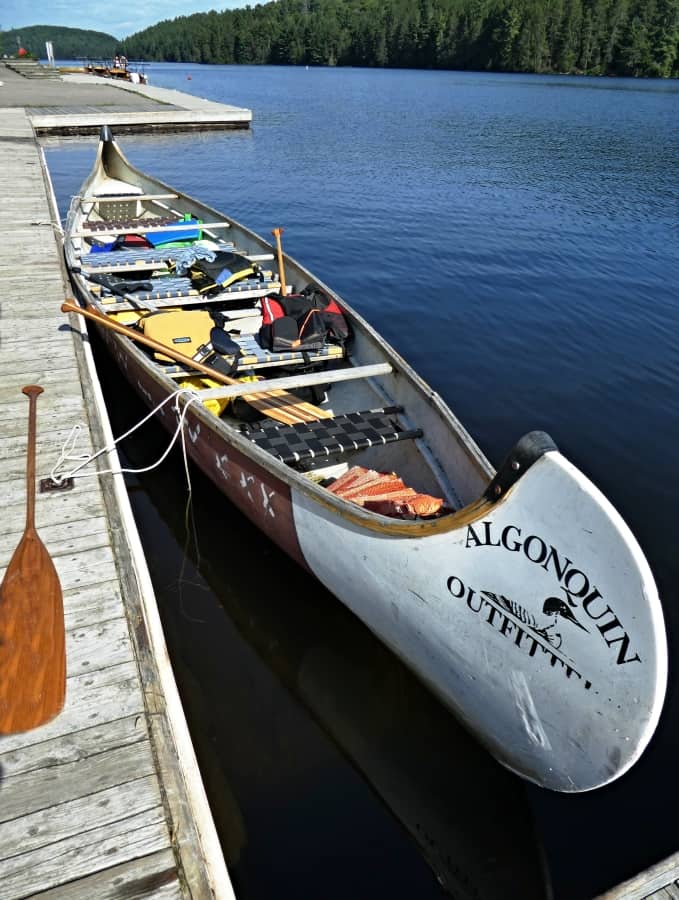
For the first day, it was a simple plan, as 3 members of our group had risen at 5 a.m. to dash to the park office on Opeongo Lake to register our campsites and book the first water taxi across the lake from the nearby Algonquin Outfitters Lake Opeongo. They were lucky and able to grab two excellent campsites sitting side by side on a peninsula jutting into the North Arm.
Insider Tip: Get to the park office early to ensure you get the campsite you want, as they go quickly, particularly on summer weekends.
The water taxi took our gear (tents, sleeping bags, food, and even camp chairs) to the campsites that we had booked. The rest of the group of 15, meanwhile, were preparing our breakfast at the Wolf’s Den, a hostel in Oxtongue Lake just outside the west entrance of the park. We had spent the night there along with a mix of other guests from Germany, Michigan, New York State, and other Canadians.
We then drove along Highway 60 through Algonquin Park to just past the 45 km point, where we made a left turn and took an additional 6.2 km drive to the Opeongo Store and the parking lot.
Day 1 -Paddling Lake Opeongo

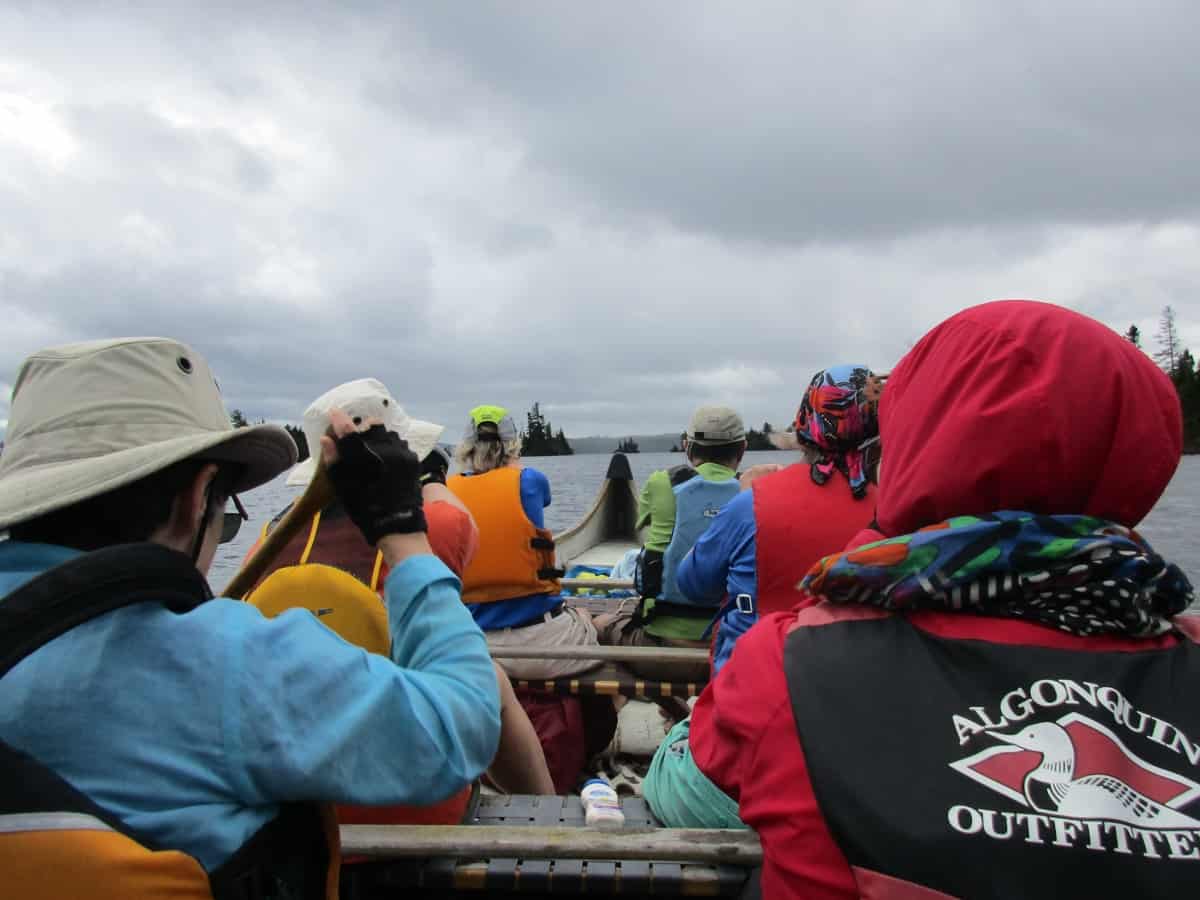
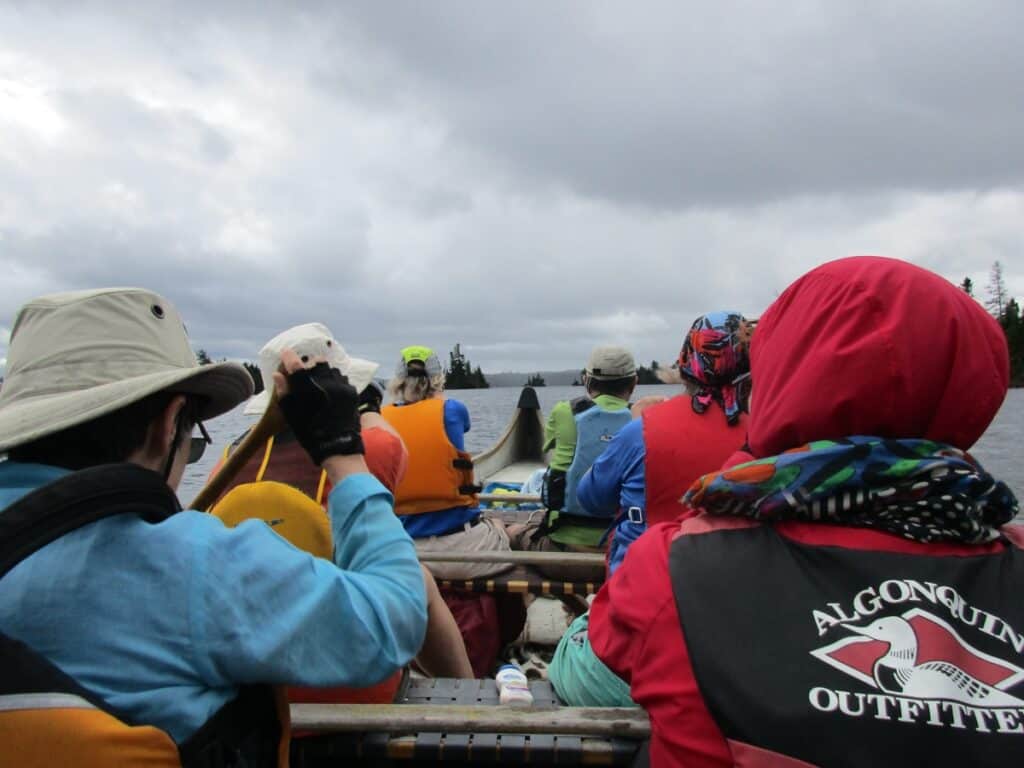
Our canoe rental was a huge Voyageur, weighing about 250 pounds and holding up to 10 people, although we only had 7 in one and 8 in the other. We had booked these in advance from the Opeongo Store run by Algonquin Outfitters. Besides Opeongo canoe rentals, Algonquin Park kayak rentals are also available from the store.
At the Lake Opeongo access point, we headed to the docks, and in went the day packs with our lunches and cameras. We started up the channel in Sproule Bay, trying to keep our strokes in time for the 15 km paddle to the campsite.
We quickly noticed what is called a common Loon, but perhaps a curious loon would be a better name, as they kept popping up near our canoes to spy on us as we traveled across open water up the lake.

We were not alone; Lake Opeongo is one of the most popular in the park, so there were plenty of other flotillas of canoes headed north. Some others had chosen to rent water taxis, which can hold up to 4 canoes on their racks, as they raced to the campsite on the lake.
Many would continue onto Algonquin canoe routes to the Happy Creek Isle Portage or Proulx Lake Portage on the north end, giving them a quick start to the more remote sections of Algonquin Park, such as Little Crow Lake and into Big Crow Lake.
There had been a small forest fire along the shores of Opeongo Lake the previous week, but weekend rains had put it out, and we didn’t see any evidence of its occurrence. It is always something to keep an eye on when in the backcountry wilderness.
About halfway up the lake, we stopped at a small island to enjoy our lunches before continuing to the campsite. There are no cottages on the lake and very few motor boats, so it is quite quiet except for the lapping of the waves and loons.
One popular area to camp is Jones Bay, about two-thirds of the way north on the eastern shore, but we continued even further. There are many options for Algonquin Park canoe trips using this lake as a base.
Our Lake Opeongo Campsite
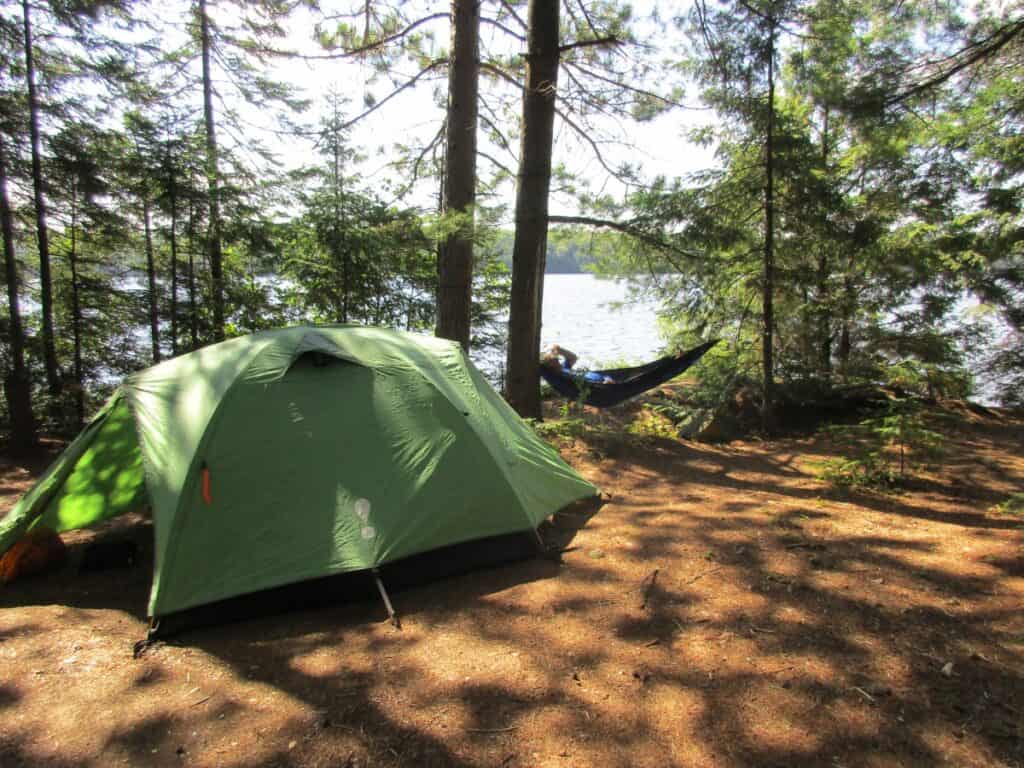
After a 4-hour paddle, we arrived at our peninsula campsite, a breezy location great for keeping the bugs away and for scenic views in several directions. We set up our tents, water filter systems, and other gear. We located the thunderbox a little bit away in the forest, a simple wooden box with a toilet seat and lid with a nice view of the surrounding forest. Very peaceful area to do your business
In our case, with a large group, it is always easier to divide into teams to prepare the meals and clean up afterward. So part of our crew started on our first dinner; the menu was impressive, featuring Rotini with beef and spinach, garlic bread, salad, and dessert. Previous visitors to the site had constructed a wooden table where we had placed our stoves, making things easy to prepare and wash the dishes afterward.
We had purchased generous-sized bags of wood for $10 from the Opeongo Outfitters Store and set about getting a campfire going for the first night. Similar to many provincial and state parks, you are required to use locally purchased firewood.
Also, there was the task of hauling our food packs (in dry bags) up into the trees, as there could be some of over 2,000 Algonquin Park bears prowling in our area. No bears in sight, we went to sleep to the haunting sounds of the loons. We didn’t hear any of the 300 wolves in the park that night either.
Day 2 – Exploring the Lake
Breakfast included fresh fruit featuring sliced oranges, sausages, scrambled eggs, and English muffins with peanut butter or jam. Yes, we enjoyed our meals. And around this time, we had a few raindrops, but it didn’t amount to anything.
For any paddlers looking to make the most of their Lake Opeongo canoe trip, there are plenty of activities to enjoy once you arrive at the lake. So on the next day, you can do some fishing, swimming, bird watching, even beaver spotting, or just relax with a good book.
We had a full day free, so about half the group decided to relax around camp, and we had brought comfortable camp chairs on the water taxi. We were able to see many canoeists just offshore as they headed towards the short portage and the backcountry.
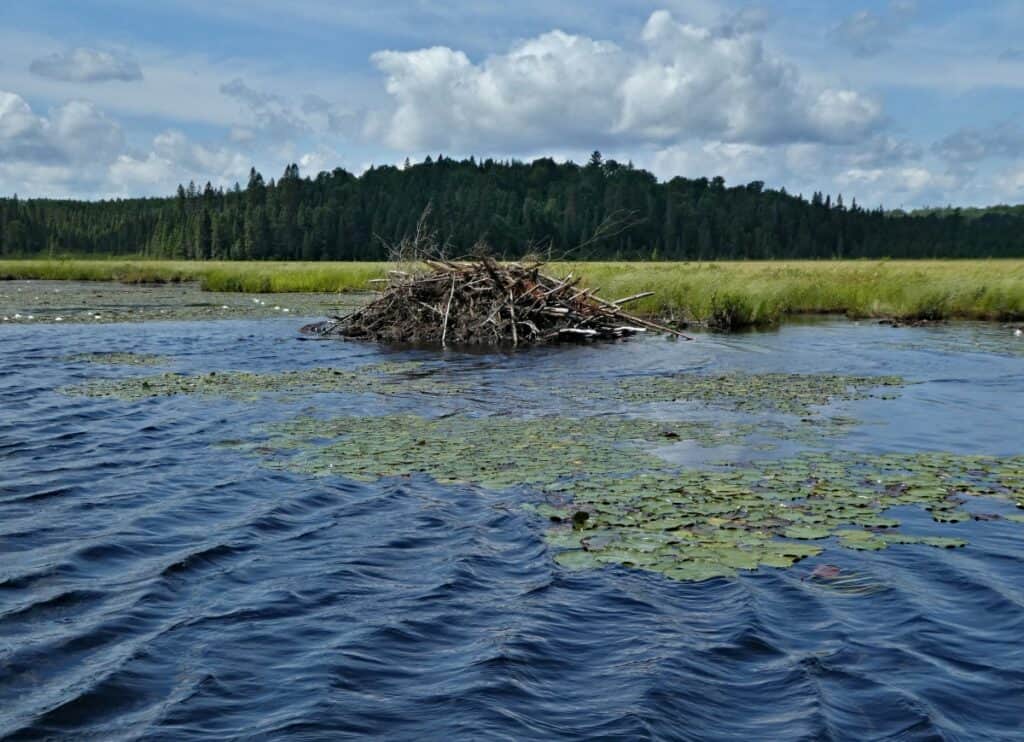
The others got in one of the canoes and headed across the North Arm to the west shore and Hailstorm Creek Nature Reserve, paddling to the end. Along the way, they encountered a beaver dam requiring a lift-over heading up the creek, but on the return, they were able to ride partway over and, by moving people around in the canoe, slide down the other side. No, they did not see a beaver this time.
Dinner tonight was chicken souvlaki in a pita, Greek salad, and dessert. I was amazed at how creative the trip organizers were in our menu selection. As with the other meals, a chipmunk and red squirrel ran around our feet picking up odds and ends. One chipmunk will be dining on cheese balls this winter.
Day 3 – Return to the Opeongo Store
A Major Thunderstorm

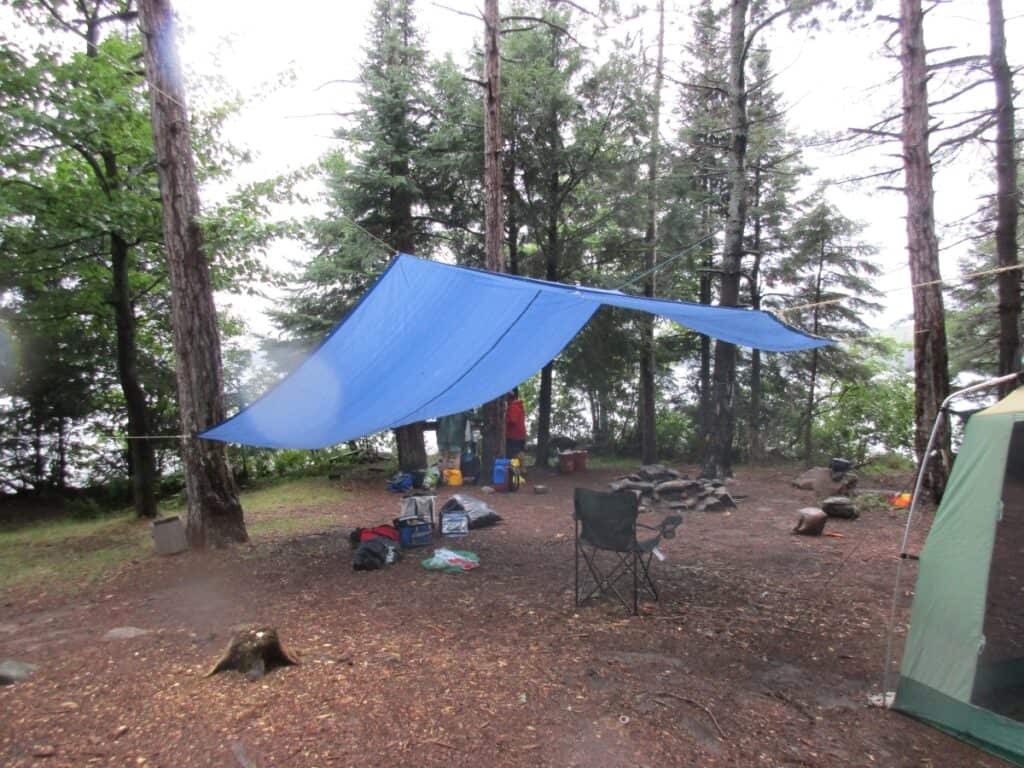
It is 6 a.m., and the boom of thunder can be heard along with visions of the flashes of lightning seen right through the tent. It was raining hard with high winds as some of us got up and headed to the shelter tarps.
However, the bad weather moved on after about one hour. As one person explained, “the thunderstorm” always adds a sense of danger, challenging our wits to cope.” Of course, you cannot be in a canoe during a storm with lightning, and on a massive lake like this one, it is even worse.
Return Paddle
Just a light breakfast this morning of juice, hot or cold cereals, and toasted breakfast pita. We packed up our wet tents and awaited the Opeongo water taxi (delayed arrival due to the storm) to take the gear back to the parking lot.
Back into the Voyageur canoes, we headed across the lake into windy conditions, providing rough water with white caps, but we were still singing as we paddled. It had been an amazing weekend as we arrived at the Opeongo dock. After unloading the canoes, we headed to the store for our Algonquin canoe ice cream cone treat.
Algonquin Provincial Park
Algonquin is Ontario’s oldest Provincial Park, having been created in 1893 and consisting of 7,635 square kilometers of forests, lakes, and rivers. While along Highway 60 there are standard campgrounds, hotels, and hiking trails, many prefer canoeing to see the beauty of the park’s interior. There are also numerous picnic areas, a Visitor Centre, an Art Gallery, and a Logging Exhibit.
There are over 2,000 km of canoe routes in the park and nearly just as many backcountry campsites.
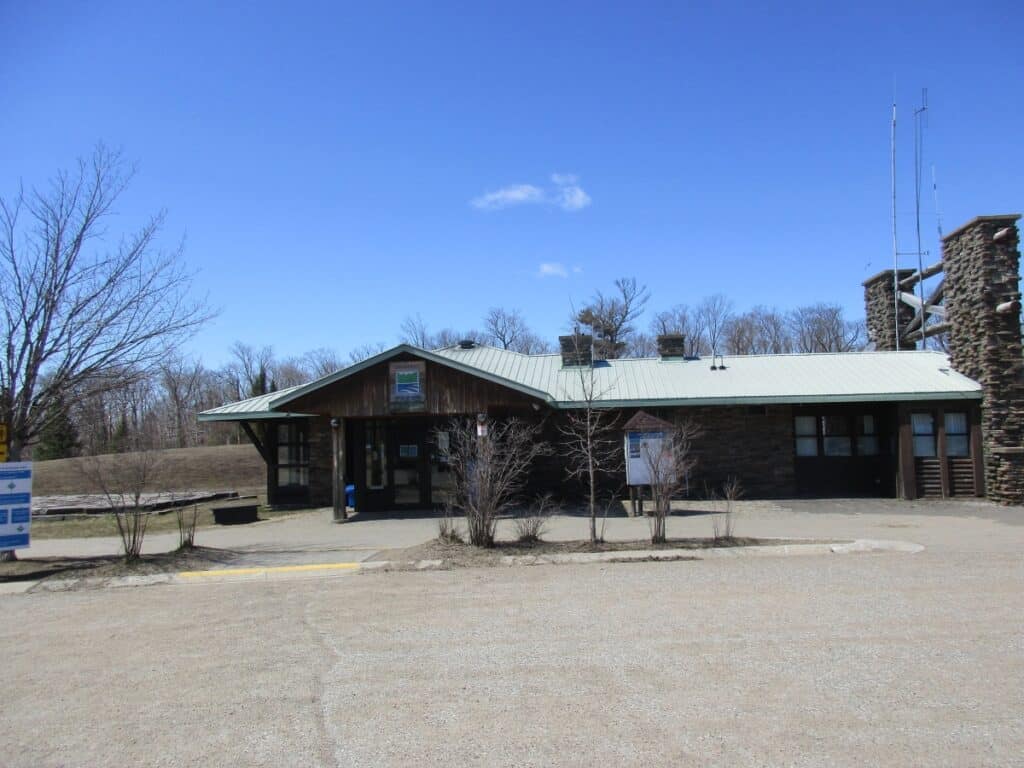
Lake Opeongo features parking and an Algonquin Park Permit office for those heading to the backcountry. There is also a store located there with canoe and kayak rentals, water taxi rentals, food, snacks, and outdoor supplies. Ontario Provincial Park Reservations for further details.
Lake Opeongo Map
Algonquin Park Guided Canoe Trips
Getting to Algonquin Provincial Park
From Toronto, drive north on Highway 400 and then Highway 11 from Barrie. At the north end of Huntsville, head east on Highway 60 to the park entrance. Takes about 2 1/2 to 3 hours. Some scenic driving routes to Algonquin.
Discover Cars can arrange a rental for the drive if required, while Parkbus provides limited bus service.
Algonquin Park Canoe Resources
Algonquin 1-Corridor North – topographic map and guide to the area
A Paddler’s Guide to Algonquin Park – Algonquin Park guide of 35 park canoe routes
What to bring for your canoe trip
FAQs: Lake Opeongo Canoe Trip
Is Lake Opeongo windy?
Lake Opeongo is big, so the wind can be an issue and cause some big waves, making the lake almost impassable for those in a canoe at times. Winds tend to be light at dawn and tend to settle down in the evening as well.
Can you swim in Lake Opeongo?
Taking a swim from the rocky shore near your campsite is one of the joys of summer in Algonquin. Also, there is a sandy beach at the end of the portage trail at the north end of the lake.
How deep is Lake Opeongo?
Lake Opeongo is 49 meters deep in places.
Where can I canoe in Algonquin Park?
There are over 2,000 km of canoe routes in the park. However, if you are just looking for a day paddle, head to Canoe Lake or Lake Opeongo, where there are stores that rent canoes and kayaks.
What is the meaning of the word Opeongo?
The name Opeongo comes from the Algonquin word opeauwingauk, which means “lake that is sandy at the narrows.”
What is the best time of year to canoe in Algonquin Park?
From mid-May, when the ice clears from the lakes, to early October is good for canoeing in Algonquin. However, June and early July can be a bit buggy, a problem if your journey involves portages. August is a great time, or if you prefer autumn colours, the last week of September is best.
Do you need a permit to canoe in Algonquin Park?
Yes, permits are required for all park use in Algonquin, from a day visit to longer stays, including backcountry stays. During weekends in late September and early October, permits are limited, so it is recommended that you make advance reservations online.
Where is the best place to canoe in Algonquin Park?
Lake Opeongo is the largest lake in the park, about 15 km long, and has numerous campsites, many islands to explore, a canoe rental outfitter, and beautiful scenery. It should be the first you consider. Canoe trips can either be a day trip, an overnight on the lake, or a starting point into the Algonquin Park Backcountry.
How long is Lake Opeongo?
Lake Opeongo, from the parking lot next to Algonquin Outfitters to the north end, stretches a distance of 15 km. The width varies but can be up to 14 km from east to west. There are numerous islands of various sizes as well.
What is the best 2-day canoe trip in Algonquin Park?
Lake Opeongo, starting from the parking lot access point next to the outfitters and Algonquin Park permit office, is 15 km to the north end with campsites and islands to explore along the way. Once there, enjoy the campsite or explore Hailstorm Creek with marshes and beaver lodges. You can also hire a water taxi to take your camping gear to your site.
If you want more information on Ontario Provincial Parks?
If you would like more information on Ontario Provincial Parks that offer canoeing, consider reading some of our other posts:
- There are lots of canoe routes in Lake Superior Provincial Park
- Read our post about things to do in Algonquin Park or hiking in the park
- Killbear Provincial Park has canoeing along the shores of Georgian Bay
Wrap-up: Algonquin Lake Opeongo Canoeing
Algonquin Park offers an amazing opportunity to experience the outdoors with numerous campgrounds, scenic picnic areas, a variety of hiking trails, and the opportunity to see wildlife and super canoe routes.


