
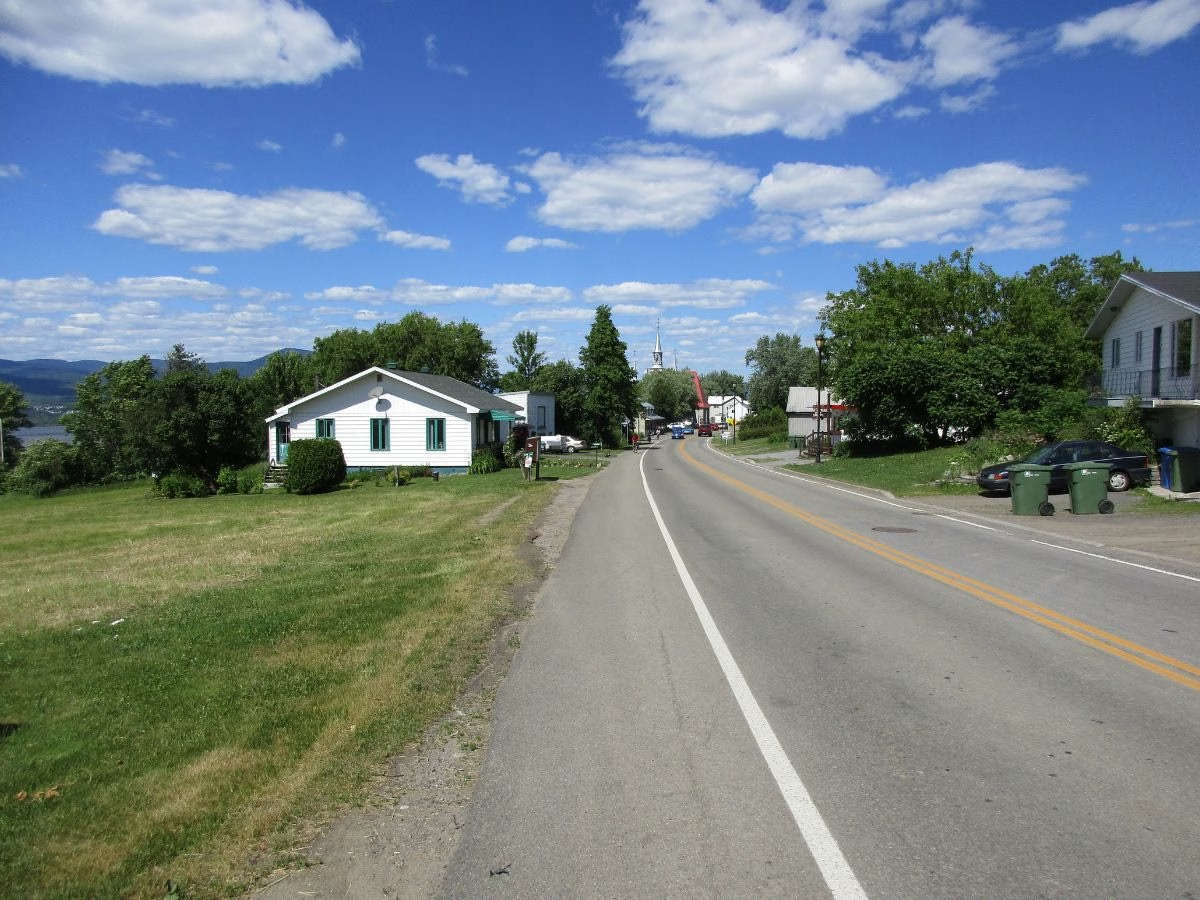

One of the best bike routes near Quebec City is Cycling Île d’Orléans. I continue to ride this route every time I am in the area, as I enjoy the scenic countryside, food stops, and views while riding on the quiet roads.
Use this guide to Cycling Île d’Orléans to help plan your enjoyable ride around this island.
Why Cycle Île d’Orléans?
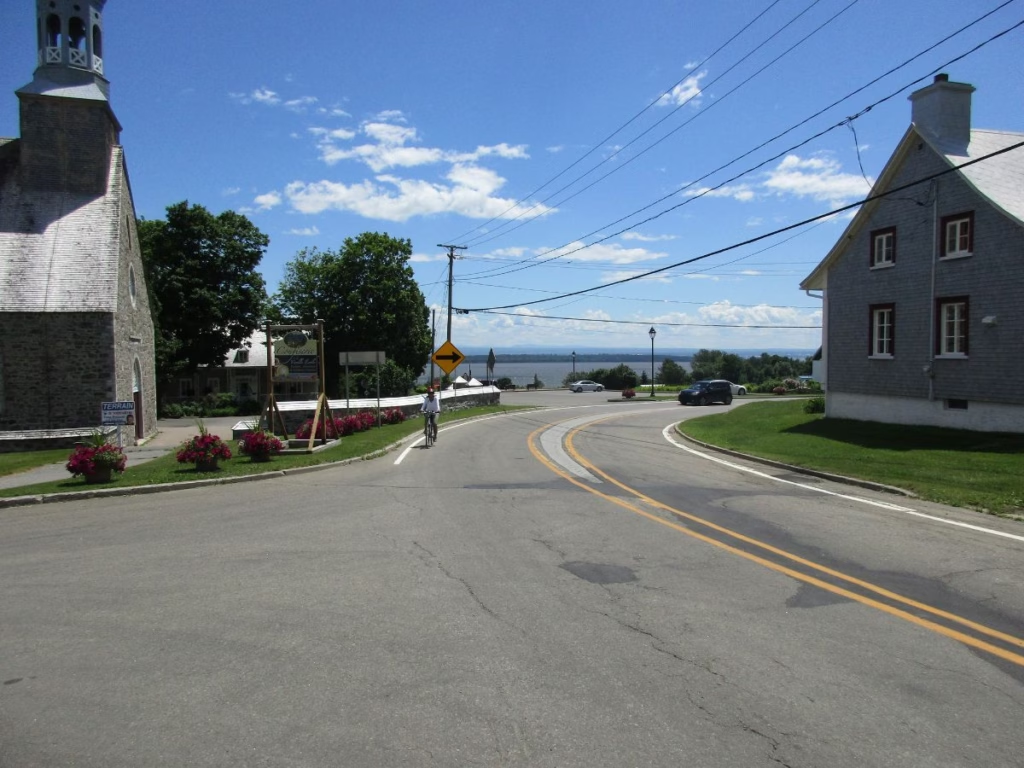
This is one of the most scenic rides in Quebec, the other being the P’tit Train du Nord cycling route through the Laurentians.
There is easy access from Quebec City by driving across the bridge over the St. Lawrence River. And once you arrive, as it is a loop route, planning is easy. I would describe it as gently rolling, although there are a few very short, steep hills.
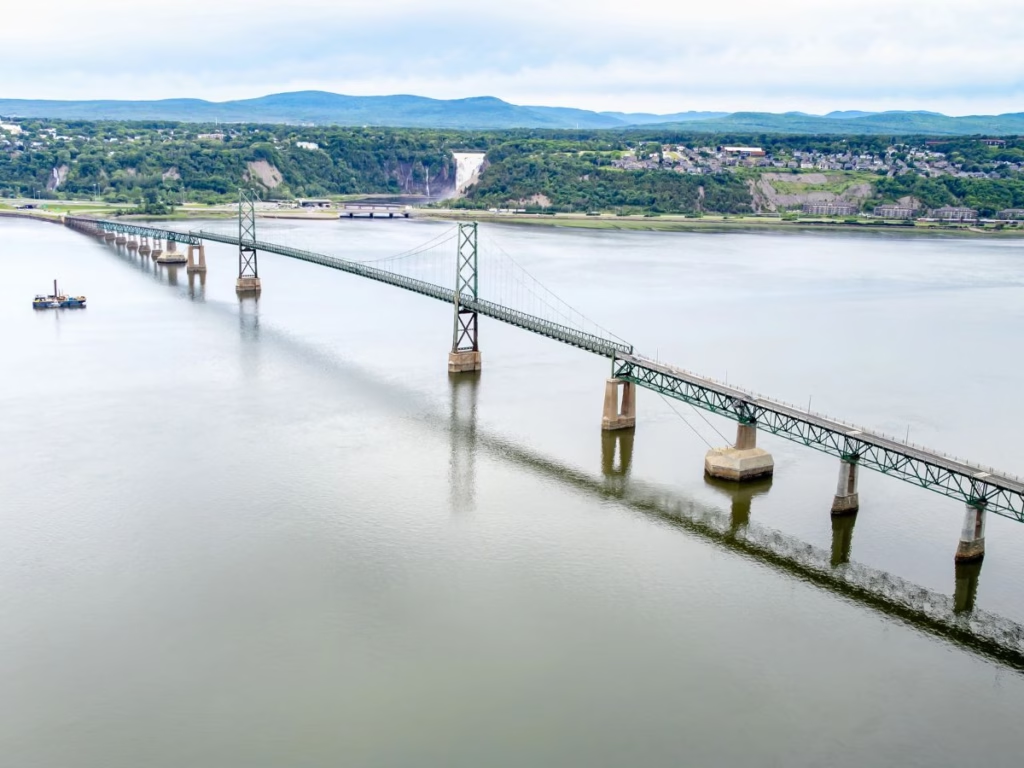
Insider Tip: the bridge connecting the island is not bicycle friendly, with a sidewalk on the bridge itself and the bike lane disappearing on the hill once you reach the island. In 2026, the bridge is under construction. I recommend you drive.
While I have only cycled the entire route, there are 3 shorter rides available. Along the way, expect to pass strawberry fields and fruit stands. An interesting chocolate shop on the west end, plus cider and fruit shops in the east end. There is a mix of cultures with many churches and stone homes, many with traditional red roofs.
Île d’Orléans Seigneury National Historic Site of Canada covers the entire island because of the history starting in 1639, and because of the system of farms from the times of New France.
Île d’Orléans Cycling Route Overview
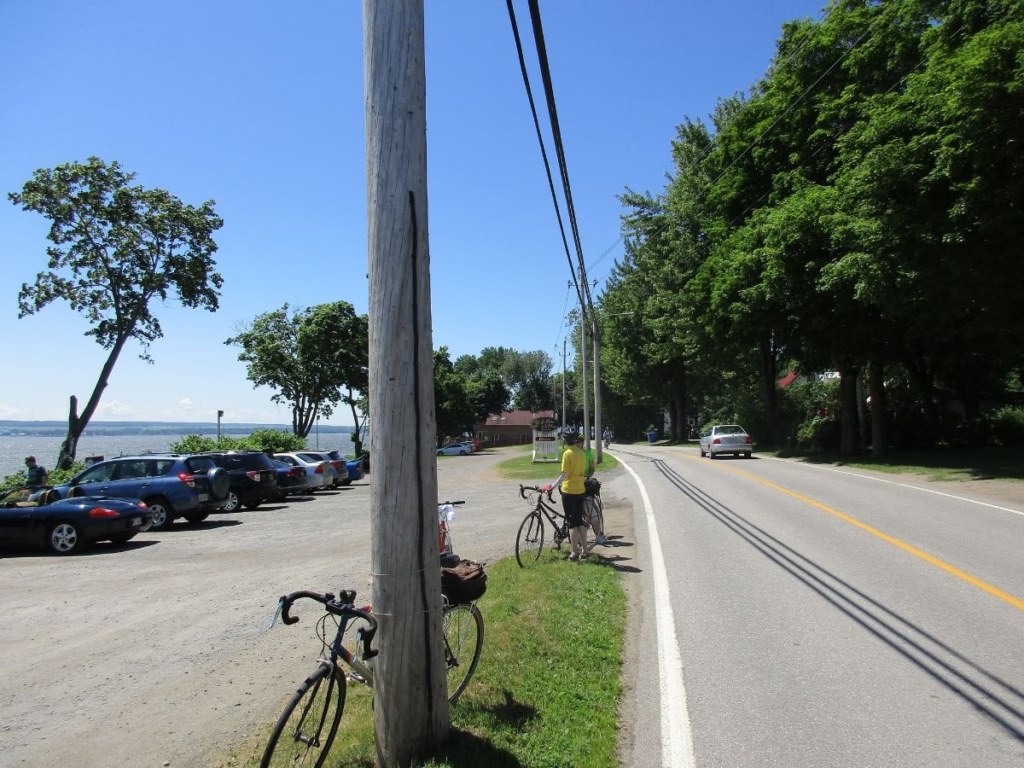
The full loop around the island is 67 km (42 miles), and the road is known as Chemin Royal. While you are riding on roads, there isn’t a lot of traffic, particularly midweek, and I didn’t find it an issue. I cycled counterclockwise from the tourist office so that I passed the many food and wine shops near the end of the ride.
As mentioned before, it is mostly rolling hills with a couple of short, steep sections.
These are the 3 shorter routes:
Circuit Beaulieu
A 21 km (13.1-mile) route on the western end of the island. You cut across the middle of the island with a 7% grade.
After starting from the tourist office, you shortly pass on your right the Domaine Orleans Cidrerie.
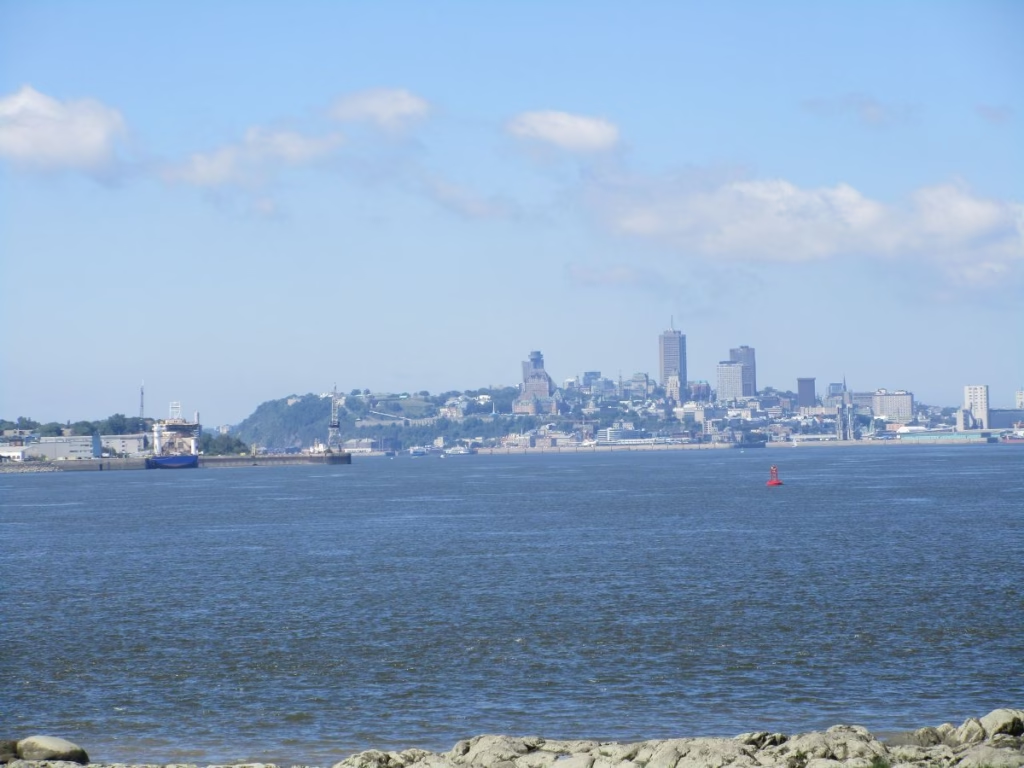
Sainte-Pétronille and Église Saint-Pierre are the two major towns on this route. But you pass art galleries, a chocolate shop, and several restaurants along the way. The best thing about this route is the views of Quebec City across the St. Lawrence River, and that it is connected to the island bridge.
Circuit Des Clochers
This ride has you riding across the middle of the island in both directions for a total of 38 km (23.8 miles) once you arrive at the start. Again, the grades across the middle sections are 7%.
Towns include Saint-Laurent with an interesting church; Saint-Jean with a chapel built in 1885. The south shore has several Inns and restaurants, while the north shore section has a few lookout points.
Circuit Jacques-Cartier
Located at the eastern end of the island, this 34 km (21.2 miles) section has the most scenic lookout points, including the observation tower (free) located in a park and numerous shops with island products.
The towns of Sainte-Famille and Saint-François, with their historic churches, are located along this ride. Expansive views of the St. Lawrence River and the ski hills of Mont Sainte-Anne can be seen.
Map of the Île d’Orléans Cycling Route
This map shows the full cycling loop around Île d’Orléans, starting and ending at the bridge near Québec City.
Cycling Distance: ~67 km
Time: 3–5 hours
Difficulty: Moderate
Highlights Along the Ride
Sainte-Pétronille (best views of Québec City)
Located on the western end of the island, the town features a church built in 1871 and a wharf area. I stopped at the Smith Cafe for a coffee and pastry. I also suggest stopping at Chocolaterie de l’le dÓrleans and then walking across the road for a great photo opportunity of Quebec City.
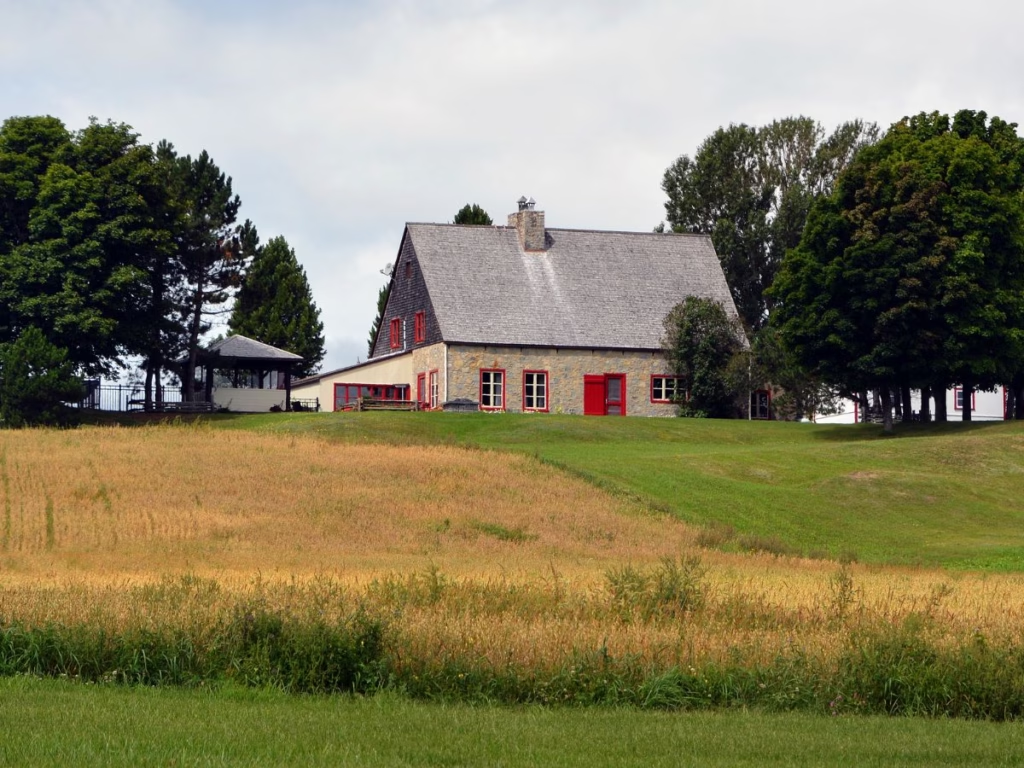
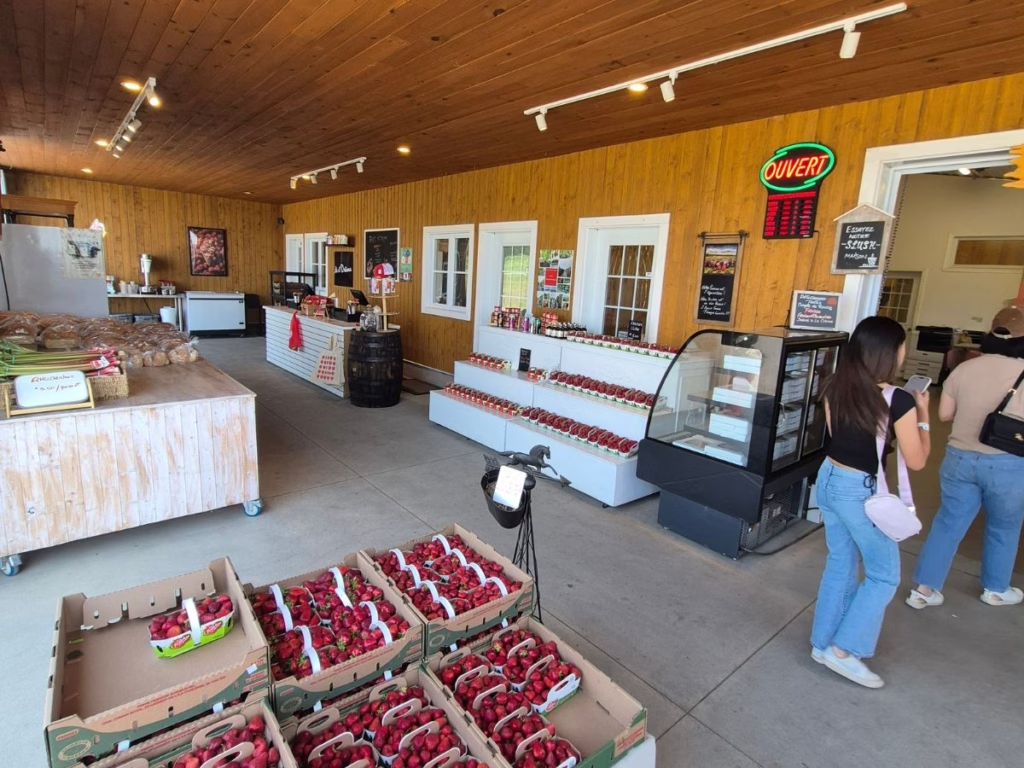
Just past the town, you could view traditional homes with the red roofs, typical of the region. Also on the right were fields of strawberries, where, during one of our visits, workers were picking. As expected, there are fruit stands along the road.
There are also lavender fields beside the road. The road now becomes known as Chemin Royal.
Saint-Laurent (great stop midway)
The maritime park with its wharf and marina was worth a stop about 10 km into the ride, at Saint-Laurent. Do not expect to be alone, as many other cyclists also stopped here during our visits. We walked over to the church, dating from 1860, during the break.
The next section to Saint-Jean was fairly flat with restaurants and traditional homes on the left and a sweeping view of the St. Lawrence River on the right.
Saint-Jean (quiet countryside)
Stopping in Saint-Jean to visit the pastry shop (on your left) makes a nice break. During one of the rides, local artists had set up displays in the neighbouring park.
Leaving town, you can expect a small hill, but you are rewarded with superb views of the east end of the island when you reach the top.
Saint-François (great views)
The ride to Saint-François may be the most scenic section with several lookout points. In the town, you can stop for a minute or two to view the church.
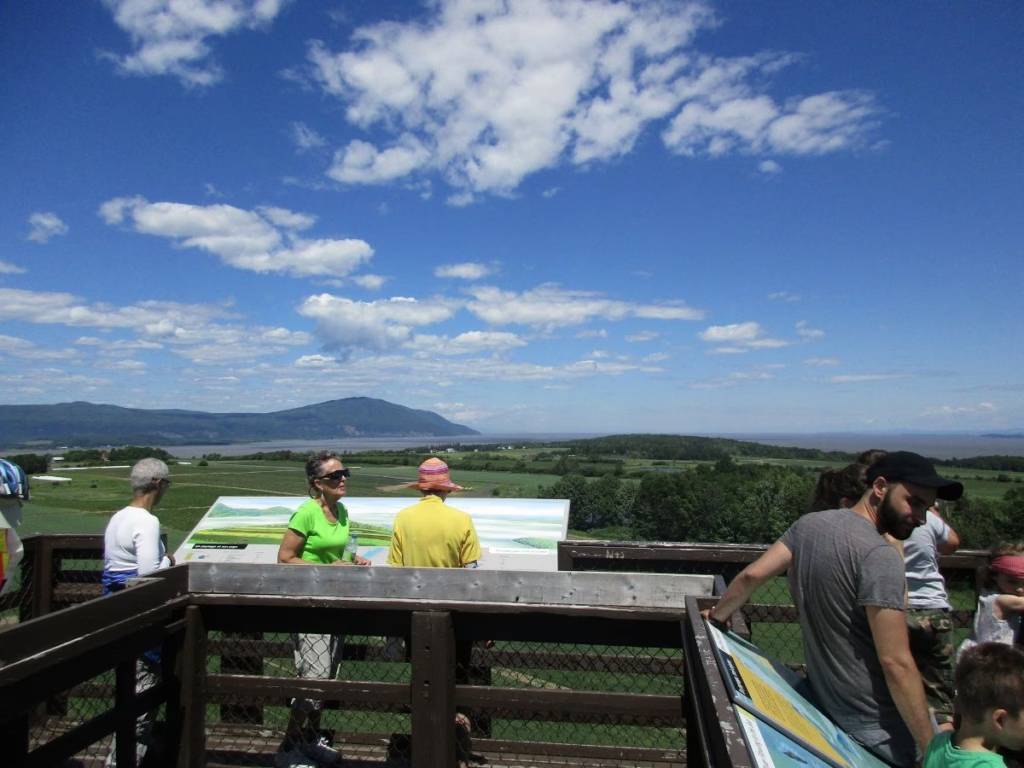
Continue a short distance up a long hill to La Pointe d’Argentenay et sa tour d’observation at the east end of the island. There are picnic tables, washrooms, a snack bar, and the wooden observation tower. Open seasonally.
Farm stands and bakeries (local products)
Loop around the east end of the island, and you will pass numerous shops featuring baked goods, cider, wine, and other local products. Continue the loop back to the tourist office and bridge.
Île d’Orléans is often called Quebec City’s pantry, and you will pass fruit farms, some vineyards, cheese shops, and roadside stands. The shops sell traditional foods such as maple syrup, black currants, fresh strawberries, and local black currant wines.
The last part past the tourist office was a slight downhill to where we had parked our cars.
What to Expect When Cycling Île d’Orléans
- Traffic levels: generally light traffic during the times I have cycled the route. The busiest section, as you would expect, is at the traffic lights for those arriving or departing on the island bridge. There were a lot of other cyclists doing this route.
- The shoulder width varies, so most of the time you will be riding on the road, but as mentioned, motorists are used to cyclists on the road.
- Wind can be a factor, and as the route is a loop, it can be expected at some point.
- Gently rolling terrain with a few very short hills and a longer one approaching the observation tower.
- Great views of Quebec City, the St. Lawrence River, and Mont Sainte-Anne
Is Île d’Orléans Good for Beginner Cyclists?
- Suitable for intermediate riders due to the distances and the few hills. However, with an e-bike (available for rental), beginners can easily do the entire route.
- Beginners can also do sections, as there are 3 shorter loops.
- There are guided tours using both regular and e-bikes, which go at a decent pace and are suitable for beginners. Most of these include stops for tastings.
Île d’Orléans Bicycle Rentals and Tours
Guided E-Bike Tour with Tastings – a half-day tour where you have the scenic views, but also taste local products
Electric Bike Rental on the island – a 4-hour rental with suggested routes
Tandem Bike Rental – also a 4-hour rental with suggested routes
Regular Bike Rental on Ile d’Orléans – for a 4-hour rental with car parking provided for your drive to the island
Tips for Cycling Île d’Orléans
- Start early, as it can get hot during the day, and the winds pick up. Also, people on day tours from Quebec City tend to arrive a little later, as many go to Montmorency Falls first.
- Go midweek if you are able, as it is not as busy as the weekend.
- Which direction to ride is best? Some feel clockwise for better views, and you do end the ride going uphill. I, however, have always gone counterclockwise, which also has amazing views, and it leaves the shops close to the end, as I don’t like carrying extra weight in my panniers.
- Do bring water and snacks, as although you pass plenty of restaurants, the shops tend to be in the last section. For lunch, either stop at a restaurant or bring a picnic lunch in your pannier, as I do.
- When you do arrive, do stop at the helpful tourist office at the end of the bridge. They may be able to provide current information, and there is a washroom. During one of our rides, a section of the main road was closed, but they did provide a very scenic detour for cyclists (it extended the distance by a few km).
- Do drive to the island and do not attempt to cycle across the bridge.
Best Time to Cycle Île d’Orléans
Be sure to read my blog post on the best time to visit Quebec City, but these are some of the highlights:
- Summer: Has the best weather, but is also the most popular time with other visitors. During one of our visits, strawberries were in season.
- Fall: You can expect beautiful foliage, and the local produce can be found in the shops, plus you have great weather. Not as busy as summer.
- Winter and early Spring: Many places, such as the observation tower, are seasonal and may not be open.
- Windy days: Try to avoid the island’s prevailing wind if possible, as it can make for a tougher ride. On one of our rides on the last section, it was so windy we felt like we were going nowhere, but we did finally reach the bridge.
How to Get There from Québec City
Cycling from Montreal to Quebec City.
La Route Verte du Quebec has two routes. The Chemin du Roy is along the north shore of the St. Lawrence River, which features numerous historic buildings. The other route is mostly on a bike path and passes through the Eastern Townships, including 2 National Parks, with cheese factories, wineries, covered bridges, art displays, and towns such as Magog, North Hatley, and Sherbrooke.
Cycling from Québec City
Head to the east on the Corridor du Littoral Route (Route Verte 5), a paved bike path right from the city, which follows the St. Lawrence River with Montmorency Falls on your left. Slightly further, take the right and cross the Île d’Orléans bridge and stop at the tourist office before beginning your ride. I do not recommend you do this, but you should drive instead or use rental bikes.
Note: Route Verte 5 continues along the St. Lawrence towards Sainte Anne de Beaupre.
The tourist office directed us down the hill (to the right), and partway down to the Public Library De Sainte-Pétronille, where there was a parking lot on the left with lots of local cyclists getting ready.
Driving from Quebec City
Take Hwy 138 east to just past Montgomery Falls and take the bridge (Hwy 368) to l’lle d’Órleans. Start with a full tank of gas, as you may not expect to fill up on the island.
What to Bring (Cycling Gear)
- Cycling helmet – with detachable visor
- Water bottles – It can get hot, especially in the summer.
- Bike repair kit – so you can do basic repairs if necessary along the journey
- Sunscreen – you will be cycling along wind-blown roads in the open, so this is essential.
- Sunglasses – sports glasses from Beacool
- Snacks and/or lunch – We did bring some snacks and a picnic lunch, but you will find restaurants along the route. Okay, we did stop at one of the bakeries in Saint-Jean in the final section.
Where to Eat Along the Route

- Bakeries – as mentioned, we stopped at the bakery in the middle of Saint-Jean (on your left), and it was amazing. There are plenty of other bakeries along your route.
- Fruit stands – you will find them all over the island, and what is available will depend on the season.
- Local cafés – there are many excellent cafes and restaurants along the route. We cheated a bit by finishing our ride and then returning to a restaurant in the evening (by car) for dinner.
Accommodation

Use booking.com or pick one of the options below. Many hotels may:
- Store bikes in a secure indoor room or garage
- Offer bike racks or sheds
- Sometimes allow bikes in your room (on request; always check still applies)
Auberge du Littoral – where we stayed on our most recent visit, basically because it was located on a major cycling route and had easy access to the old city about 4 km away. Another reason was that it provided free parking and a place to store our bicycles in the ground-floor rooms.
HI-Quebec- Auberge Internationale de Québec – this hostel in the old city has a place to store your bicycle.
Hôtel des Coutellier – is located in a very bike-friendly area near Old Québec. Offers secure overnight bike storage for guests and is close to the Corridor du Littoral Route.
Hôtel Aristocrate – also located near Corridor du Littoral for your cycling on Île d’Orléans. The hotel provides free, secure bike storage
Manoir d’Auteuil – located right inside Old Québec, and offers garage space to safely store bikes. This is a good choice if you wish to stay in the old city.
N Hôtel Québec is certified bike-friendly and offers a secure bike shed and repair tools.

Final Thoughts
Cycling Île d’Orléans is one of the most enjoyable day rides near Québec City. It offers a perfect mix of scenery, historic charm, culture, and relaxation. Endless views and a step back in time.


